

Datadog is an amazing tool - it pulls together metrics, logs, traces, and dashboards so that teams can actually understand what’s happening in their various day-to-day operations and applications. As a large, ever-expanding tool with high complexity, accounts can get disorganized fast if someone doesn’t own the rules. At RapDev, we typically see the same patterns pop up across projects and account management. They slow teams down, raise bills, and add risk. Here’s how they usually show up - and some practical fixes for them.
1. Correcting Misconfigured Logs
Logs that aren’t parsed, have the wrong status, or are completely irrelevant are the single biggest source of noise (and cost). We’ve seen teams ingesting huge volumes of debug chatter that never gets looked at and slowly racks up over time, slowly overloading dashboards and drowning out the logs you really want to see. These can be quickly shown by querying logs in various ways; for instance, “datadog.pipeline:false” will show logs that have not gone through a pipeline and are arriving raw. Another example is by searching for “status:info” and then also searching for generically “Error” or “Critical”, which will bring up a set of info status logs that may need to be remapped to a different status. Using log pipelines to properly parse data into JSON blocks and set the correct criticality status already drastically reduces these issues, and applying retention periods and exclusion filters ensures you and your team only see the data you care about.
2. Decluttering Monitors
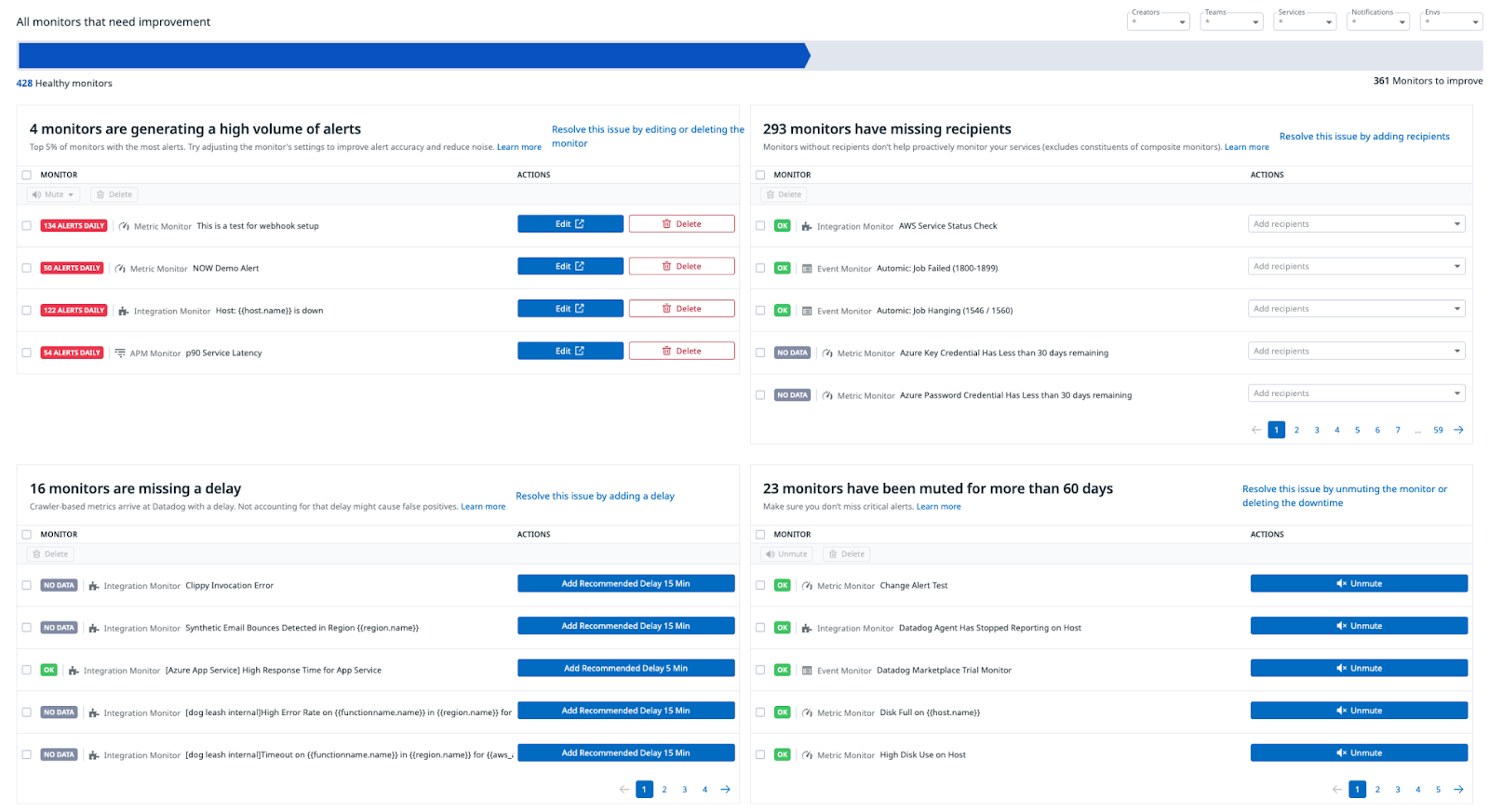
Monitors with no clear notification endpoints, arbitrary thresholds, or duplicated checks become background noise and erode trust. You don’t want an on-call engineer woken at 3 AM for a transient spike. Start by standardizing monitor templates: require an owner, an escalation path, and a runbook link. Use either larger ranges or anomaly detection for volatile metrics that may spike and then drop to avoid flapping and to consolidate duplicate rules across teams. Finally, regular reviews of monitors using Datadog’s built-in “Monitor Quality” tool will ensure all is well.
3. Public Dashboards Access
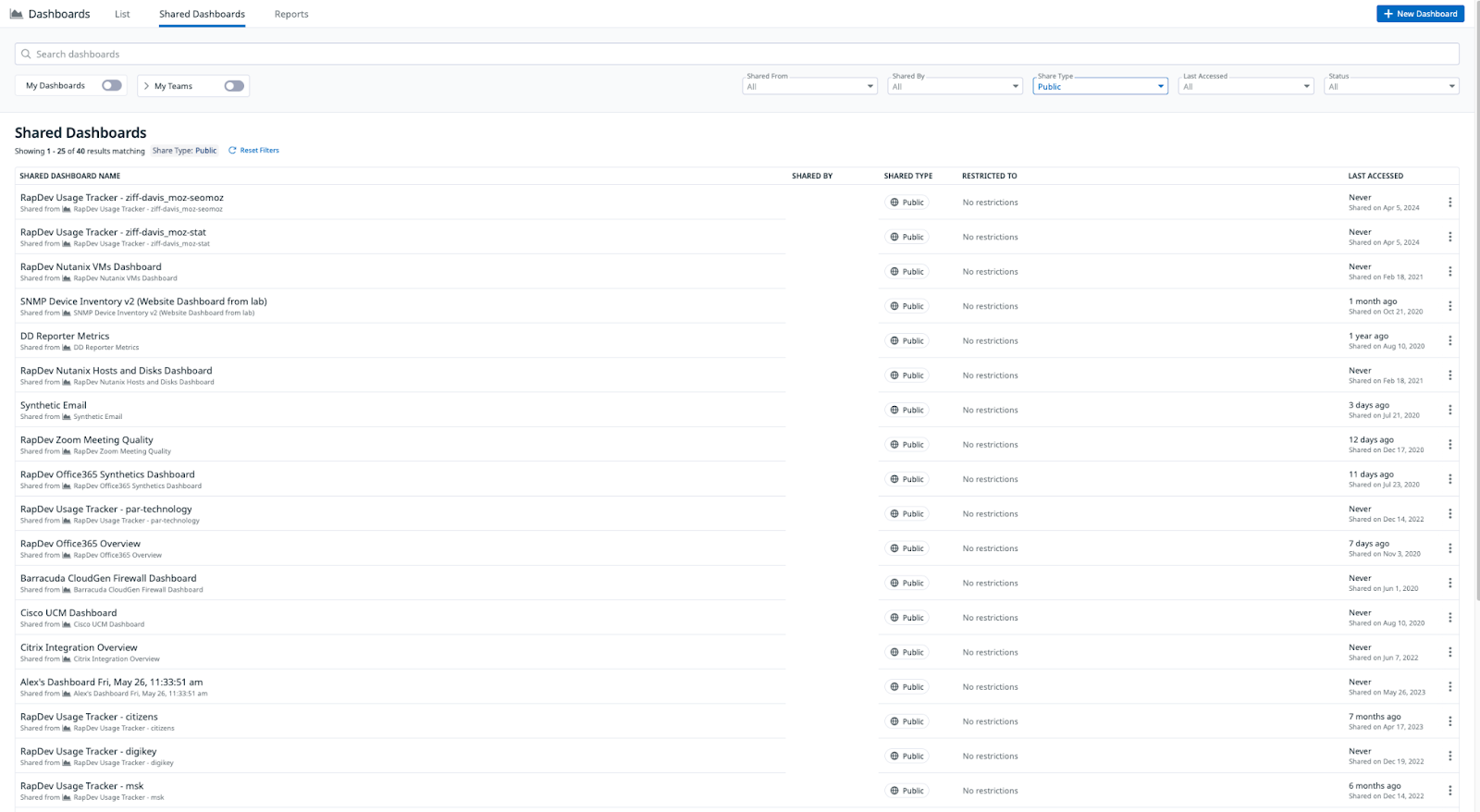
Short links are convenient - and dangerous. Public dashboards can expose internal KPIs or sensitive telemetry to anyone with the URL, even those outside of your Datadog environment. Audit dashboard permissions, revoke public links, and adopt RBAC so only appropriate teams can view or edit critical dashboards. When you need to share a dashboard externally, for example, to an executive or a viewing board in the office, you can create an invite link that can only be accessed by specific emails. To audit these dashboards, simply click into “Shared Dashboards” at the top of the Dashboards view and filter “Share Type” to “Public”.
4. Clean, Up-to-date API Keys
Orphaned keys tied to departed employees are a classic security hole. Enforce ownership and naming conventions on keys, require expiration or rotation, and automate periodic audits that flag keys owned by deactivated users. By searching for users who have been deactivated or are going to be deactivated in the search, you can rotate these keys before a security vulnerability occurs.
5. Tag Standardization
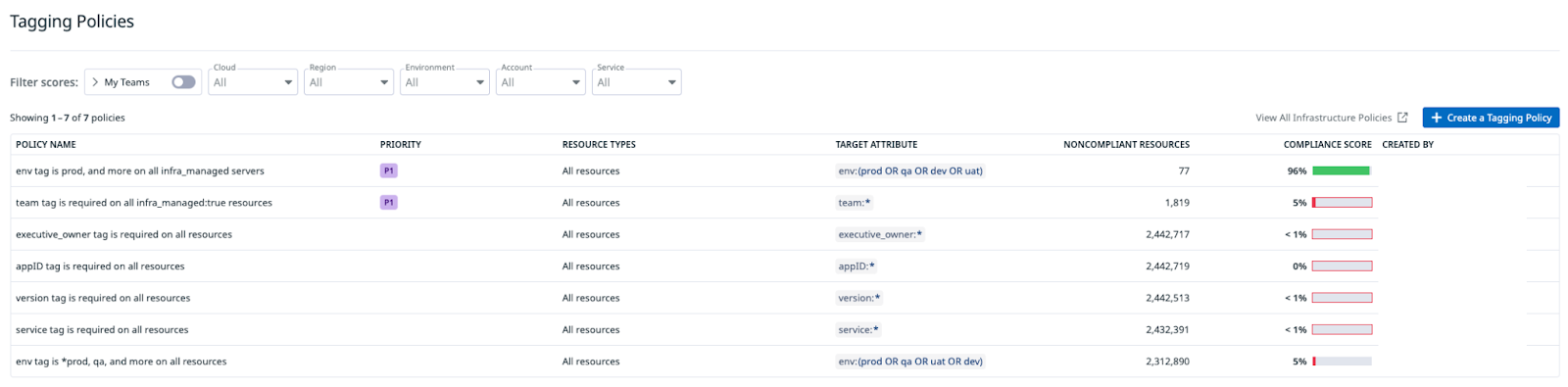
Tags are Datadog’s core - and also its Achilles’ heel when inconsistent. Multiple variations of the same tag, for example, env:prod, env:production, and environment:production, fragment queries, dashboards, and alerting. Define a global tag taxonomy, enforce it at ingestion via remapping or tagger/processor rules, and add tag checks to CI and onboarding so new services comply from day one. A simple health board can also be seen using Datadog’s Tagging Policies feature, where compliance for specific tags can be measured.
How RapDev Helps
Tidying Datadog isn’t a one-off chore - it’s ongoing governance. Our Managed Datadog service mixes audits, policy enforcement, and hands-on cleanup. You keep ownership of your environment; we provide the process, approvals, and muscle to keep Datadog useful, secure, and cost-effective. If your account feels muddy, contact us today and unlock the true potential of your platform!