

Every incident response team hits the same ceiling. Resolution time depends on how quickly a person can be reached, which caps availability. Cost grows with incident volume, because more incidents means more people. And your most senior engineers spend their days fixing the same incidents instead of doing the work only they can do.
Datadog’s Bits AI is built to lift that ceiling. But in our webinar, A Roadmap for Incident Response with Bits AI, RapDev Sales Engineer Alex Glenn made a point worth repeating: autonomy is a curve, not a switch. You don’t enable it, you climb to it. This post walks through the four Bits offerings and the four-phase path we use to climb.
Four Offerings, Four Jobs
Each Bits offering takes a different part of the work off the engineer:
- Bits Chat (ask): natural-language search and analysis. It builds dashboards and notebooks, inspects monitors and their history, and is read-only by default. It’s the front door for every engineer.
- Bits Investigation (diagnose): investigates alerts automatically, correlates telemetry and deploys, names probable root cause and impact, and can apply remediations. When an alert fires, the investigation starts before a human arrives.
- Bits Code (fix): turns Datadog context into fixes and lands them as pull requests in the developer’s own workflow.
- Bits Agent Builder (automate): custom agents you define from prebuilt actions across cloud, CI/CD, security, and ITSM tools, running inside your own controls.
Phase 1: Establish Foundations
Start by measuring where you are. We ask five discovery questions:
- How long does triage take today? This sets your ROI baseline. Bits targets the minutes before an engineer understands the problem, so if triage is already fast, the ROI conversation changes.
- What’s your false-positive rate? Noisy signals erode trust in automation.
- Where does tribal knowledge live? Bits can only read what’s documented, so knowledge in people’s heads has to be written down first.
- Who are your on-call champions? Early advocates speed up trust.
- What does a great outcome look like in 90 days? This becomes your success criteria.
This phase also covers tagging standardization and SAML mapping.
Phase 2: Optimize the Environment
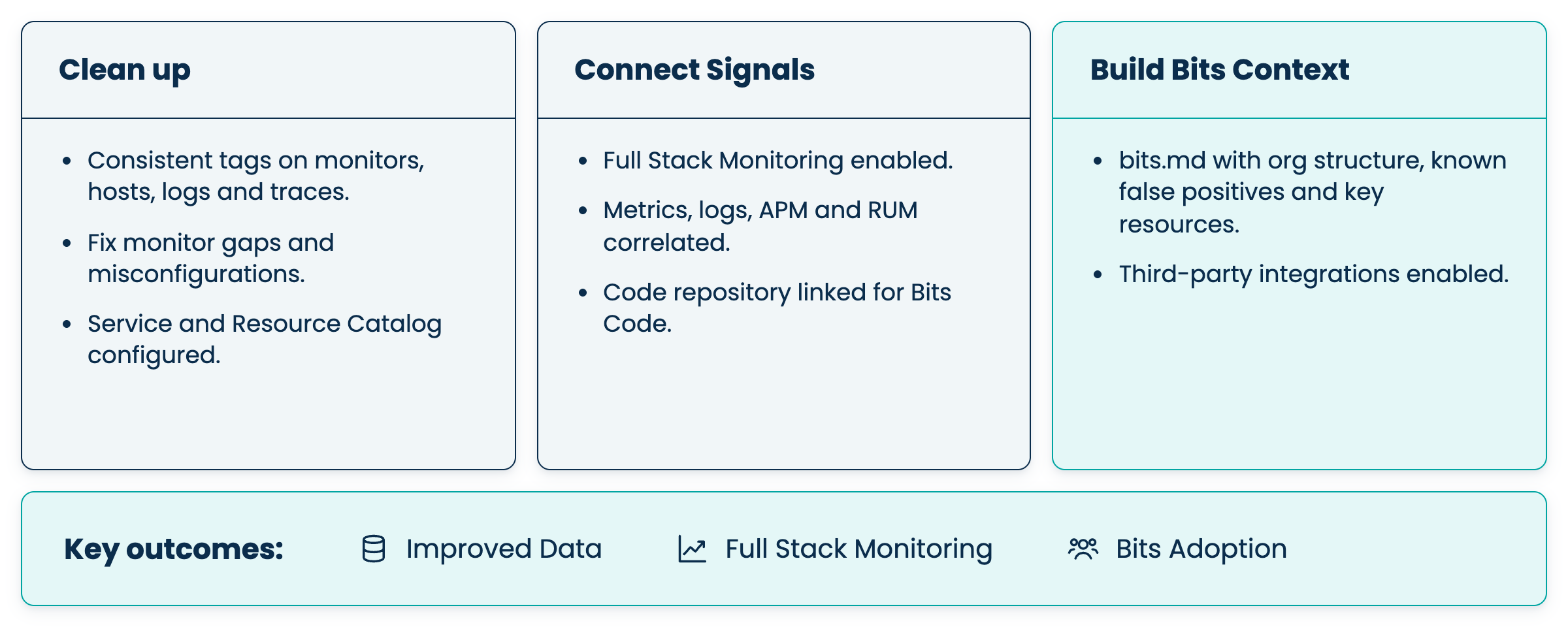
Bits is only as good as the data it can see. Clean up first: consistent tags across monitors, hosts, logs, and traces, monitor gaps fixed, and the Service and Resource Catalog configured. Then connect the signals with Full Stack Monitoring, meaning metrics to logs, metrics to APM, APM to logs, and APM to RUM, so Bits can correlate across them.
Then build context. Create a bits.md file covering your environment, key services and critical dependencies, plus team structure, on-call rotation, escalation contacts, known failure modes, common false positives, and past incidents. Start simple: even 20 lines noticeably improves results.
Phase 3: Implement Automation and Build Trust
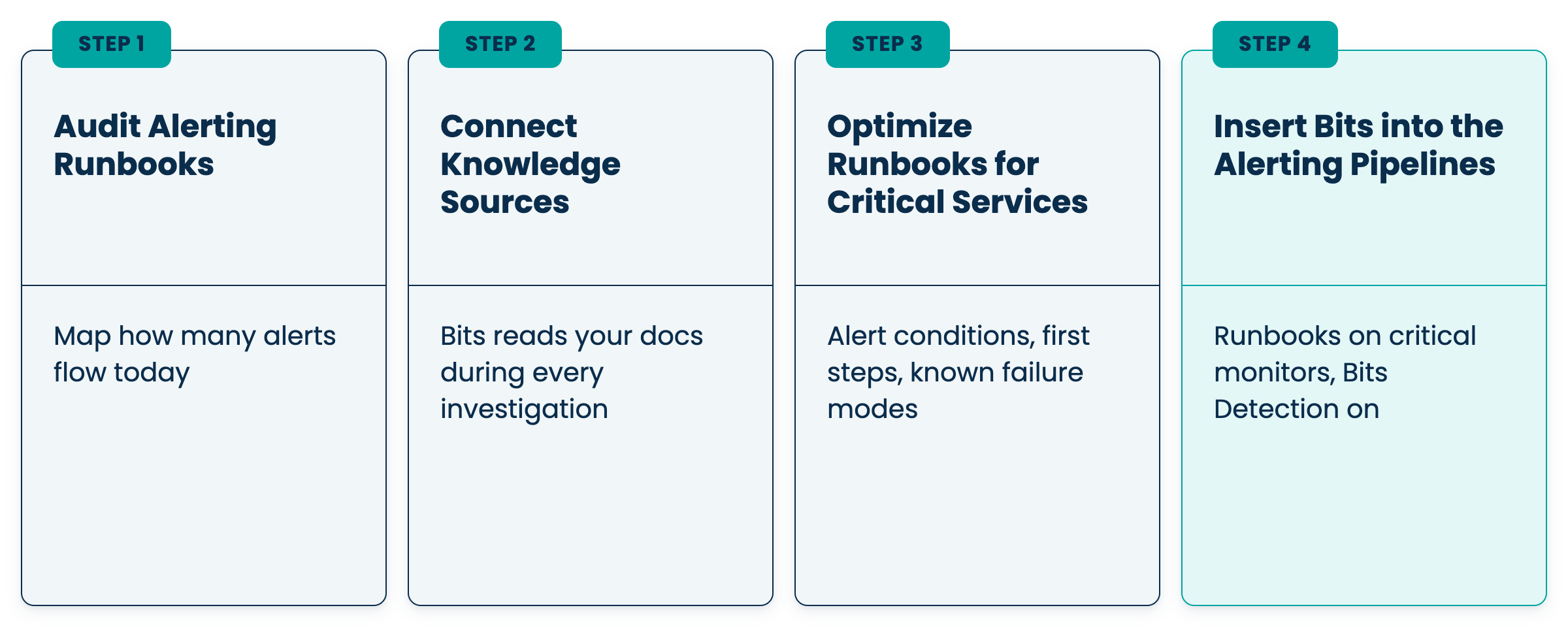
Audit how alerts flow today, connect your knowledge sources so Bits reads your docs during every investigation, and optimize runbooks for critical services (alert conditions, first steps, known failure modes). Then insert Bits into the alerting pipeline: attach runbooks to critical monitors and turn on Bits Detection.
The most important step is trust. Bits investigates, engineers rate the result with a thumbs up or down, and memories persist: reusable context like “Service X is noisy on Mondays due to batch jobs” or “Escalate DB alerts to Jane first.” Review and prune memories regularly so they don’t go stale. Name a feedback champion. Once trust is established, expand to Bits Detection (which generates monitors and finds gaps you didn’t know existed) and Bits Code.
Phase 4: Autonomous Operations
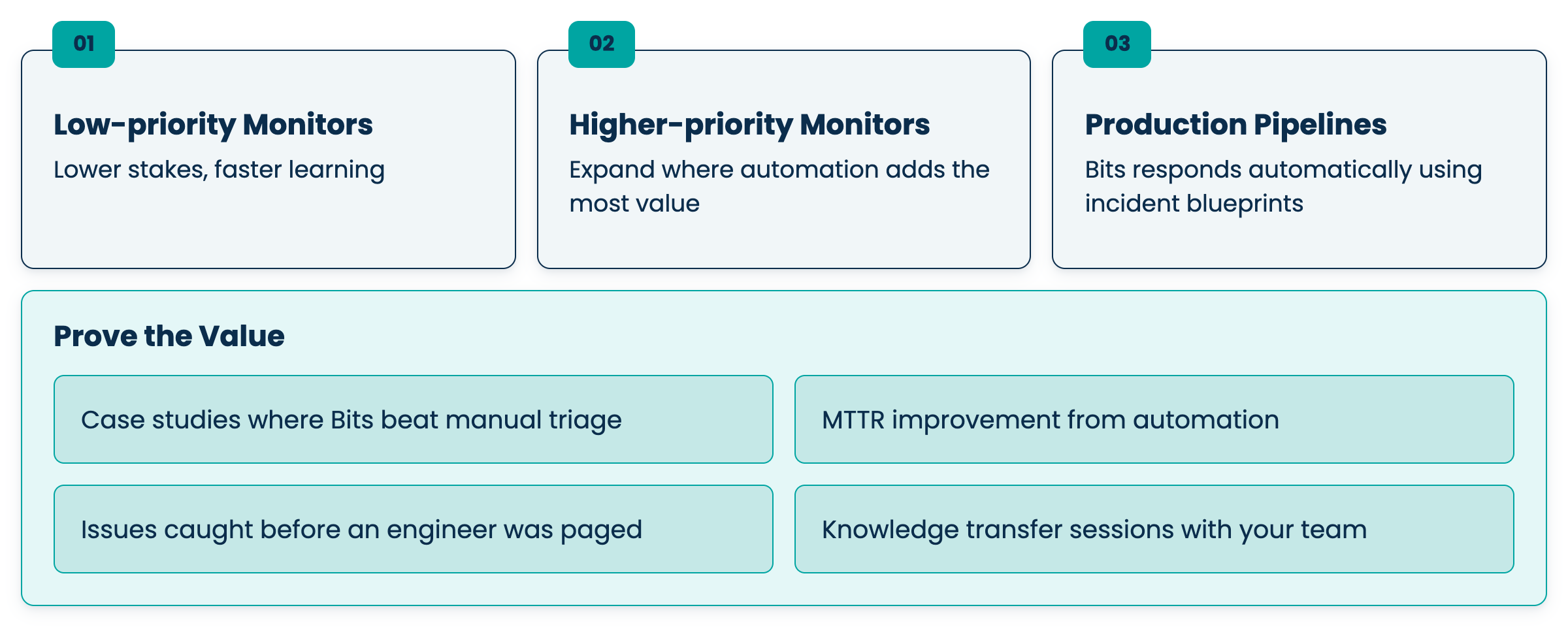
Roll out Auto-Investigate gradually. Start with low-priority monitors, where stakes are lower and learning is faster. Move to higher-priority monitors where automation adds the most value. Then enable Bits in production pipelines, using incident blueprints so it responds automatically to common incidents. Log every automated action for audit and retrospective review.
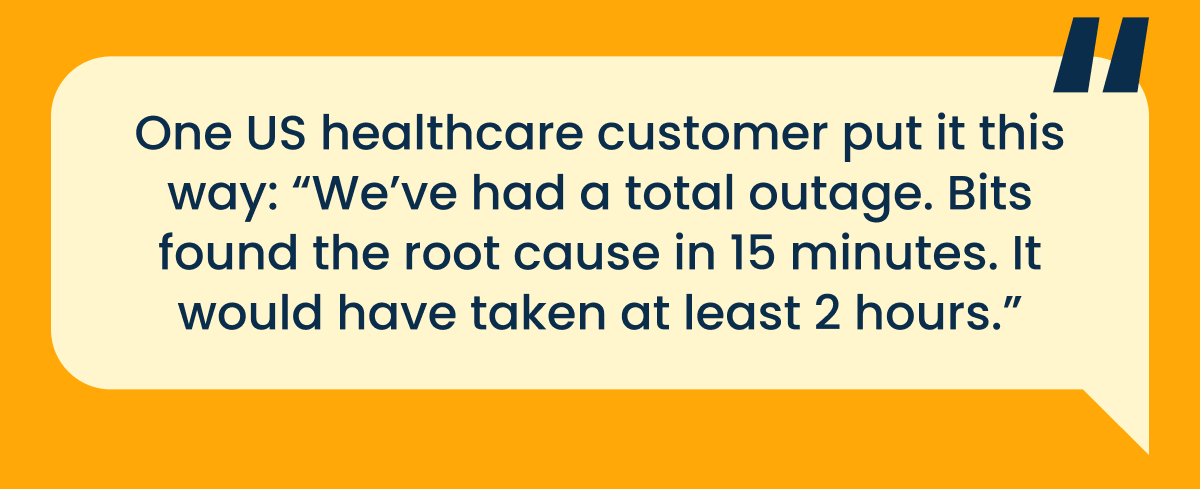
Then prove it. Document incidents where Bits found the root cause faster than manual triage, how automation improved MTTR, and cases where Bits caught an issue before an engineer was paged.
Where To Start
The most common mistake is jumping to Phase 4 with Phase 1 data. If you’re not sure which phase you’re really in, start with the five discovery questions. For a deeper look at governance and change enablement, see Tomas’ How to Roadmap Autonomous Operations, Part 1, or talk to a RapDev engineer about your environment.
Watch the full webinar: A Roadmap for Incident Response with Bits AI.