

More Tickets, Less Context
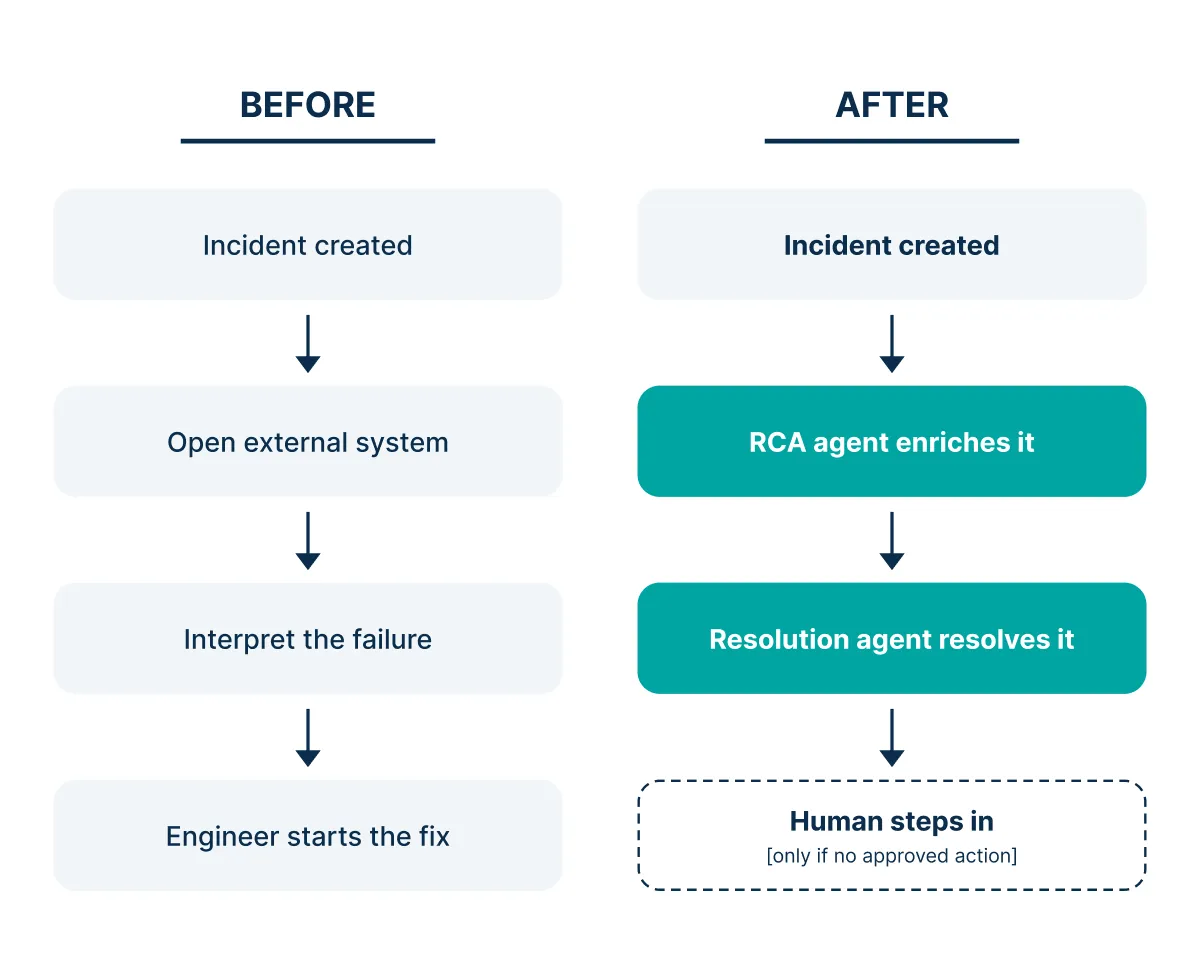
When repetitive, system-generated incidents flood into ServiceNow, your operations team shouldn't be stuck doing the same manual detective work over and over before they can even think about a fix. For many teams, that's exactly what happens. Batch job monitoring is one of the most common culprits. Incidents for long-running and failed batch jobs were constantly coming into ServiceNow, each containing a job name, job ID, and a templated description. Long-running jobs included average and current run times; failed jobs simply instructed the assignee to log in to the external platform and investigate.
Either way, the real cost was the same: an engineer logging into a separate system, interpreting the job output, and piecing together the root cause before a fix could even be considered. We built a four-agent pipeline using Now Assist that takes an incident from new to resolved with minimal human intervention at each stage and a quality check before closing. Here's how it works.
Agent 1: The RCA Agent
The moment an incident is created and routed to the AI automation group, the Root Cause Analysis agent gets to work.
Rather than waiting for a human to log in to the external platform, the RCA agent queries the external database directly, retrieves the job output, and automatically handles decoding and decompression. It then checks the job's current status to determine what comes next. All of that raw output gets synthesized into a clear, human-readable summary, which the agent uses to rewrite the incident description with genuinely useful context.
Agent 2: The Resolution Agent
With a well-enriched incident in hand, the Resolution agent picks up where the RCA agent left off.
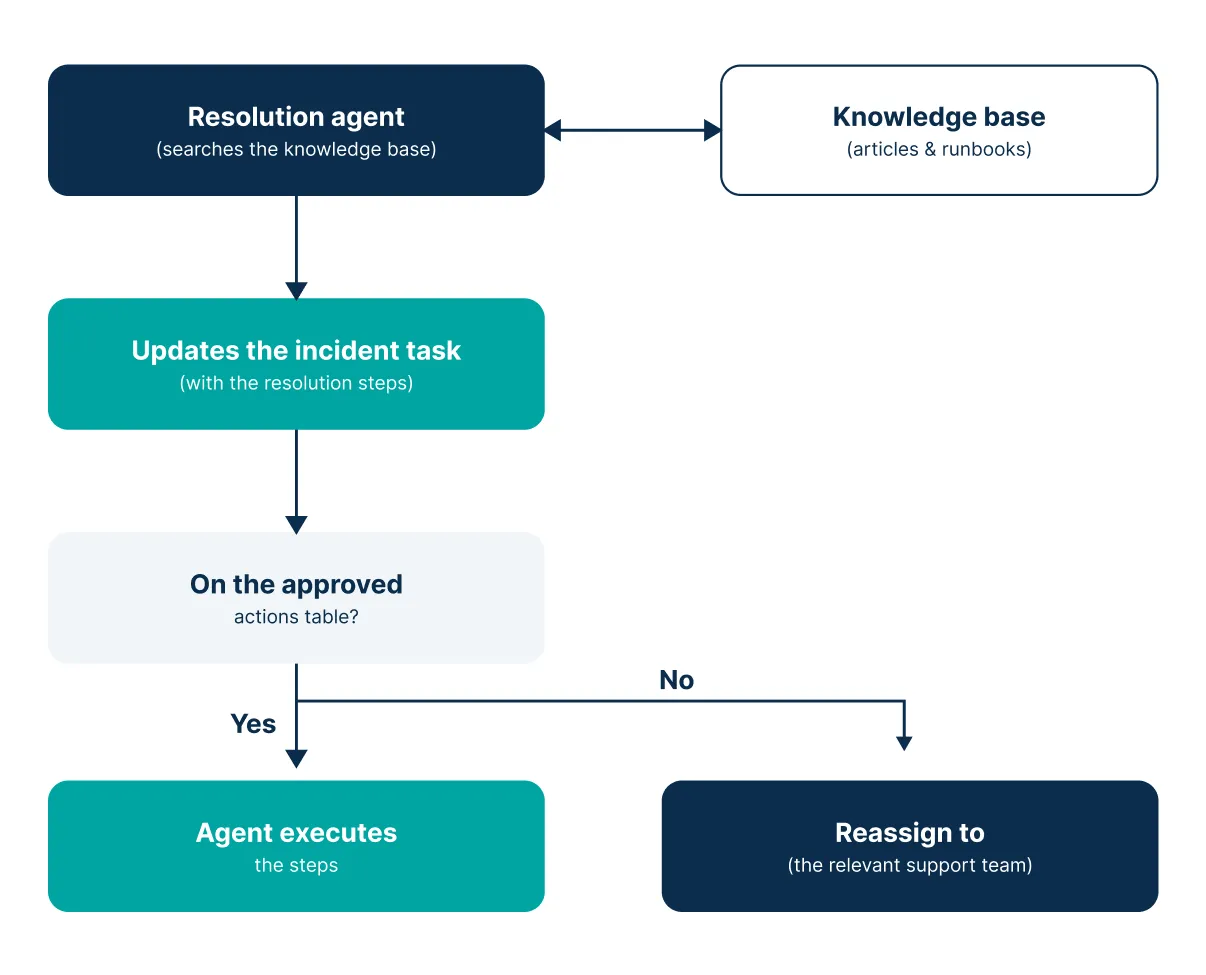
This agent searches for relevant knowledge articles across the multiple platforms the customer uses, not just ServiceNow's internal Knowledge Base, but the broader ecosystem of documentation and runbooks the team relies on. Based on what it finds, the agent determines the best course of action and posts its recommended resolution to the work notes so the team has full visibility into its reasoning.
Then comes the key design decision: a configurable list of approved actions. If the agent's recommended resolution falls within that approved list, such as restarting a job, killing a process, or triggering a retry, the agent acts autonomously. If the recommended action falls outside the approved list, the incident is automatically routed to the appropriate team for human review.
Agent 3: The Resolution QC Agent
Closing a ticket well is just as important as resolving it quickly, but resolution notes are notoriously inconsistent in most organizations. The QC agent fixes that.
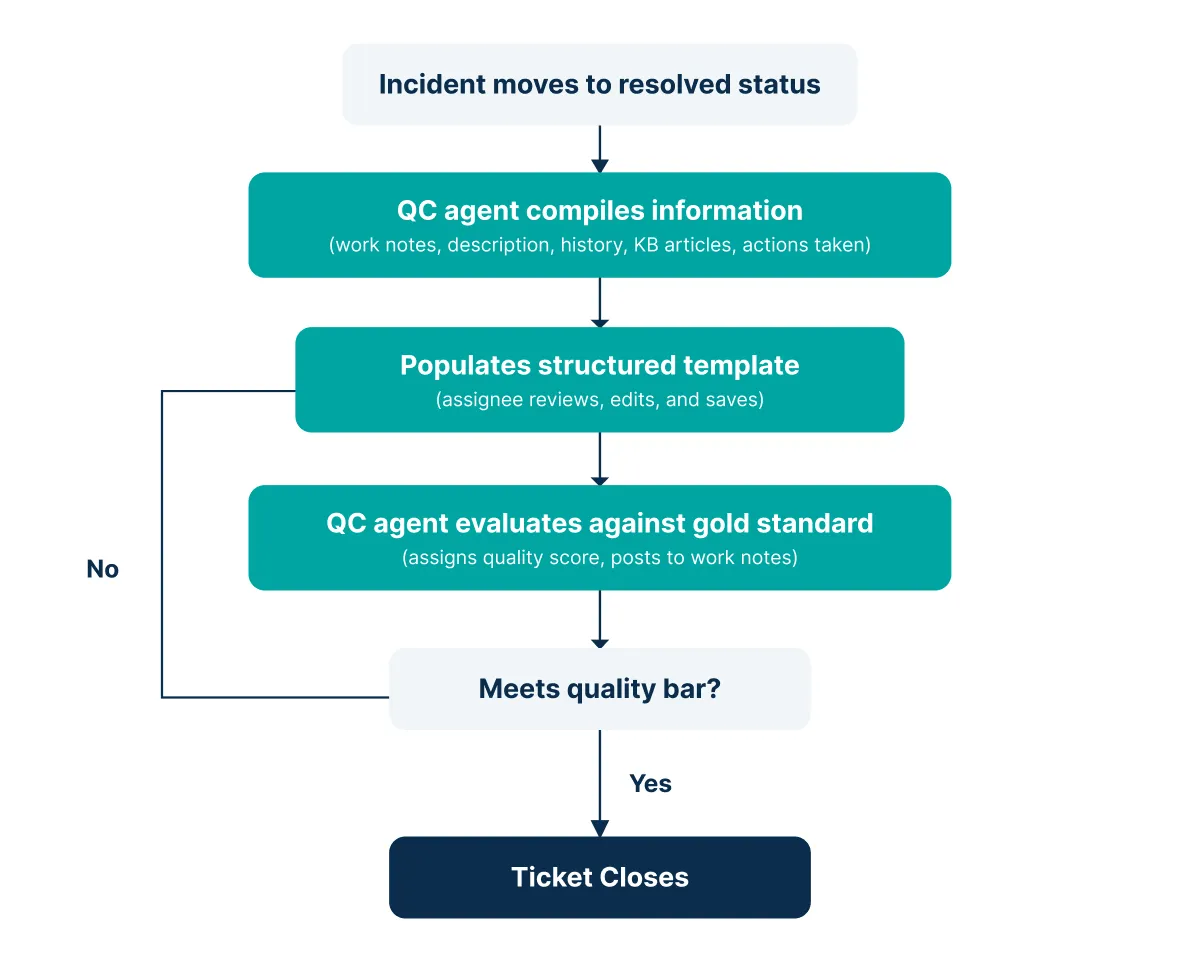
Triggered when an incident moves to resolved status, this agent compiles everything relevant from the ticket - summarized work notes, the enriched description, assignment history, referenced knowledge articles, and actions taken - and populates a structured template. The incident assignee reviews it, makes any additions or corrections, and saves.
From there, the agent evaluates the notes against a set of "gold standard" examples and assigns a quality score, which gets posted to the work notes for transparency. If the notes don't meet the bar, the assignee is notified and the review loop restarts. The ticket doesn't close until the documentation is genuinely good.
Agent 4: The Knowledge Curation Agent
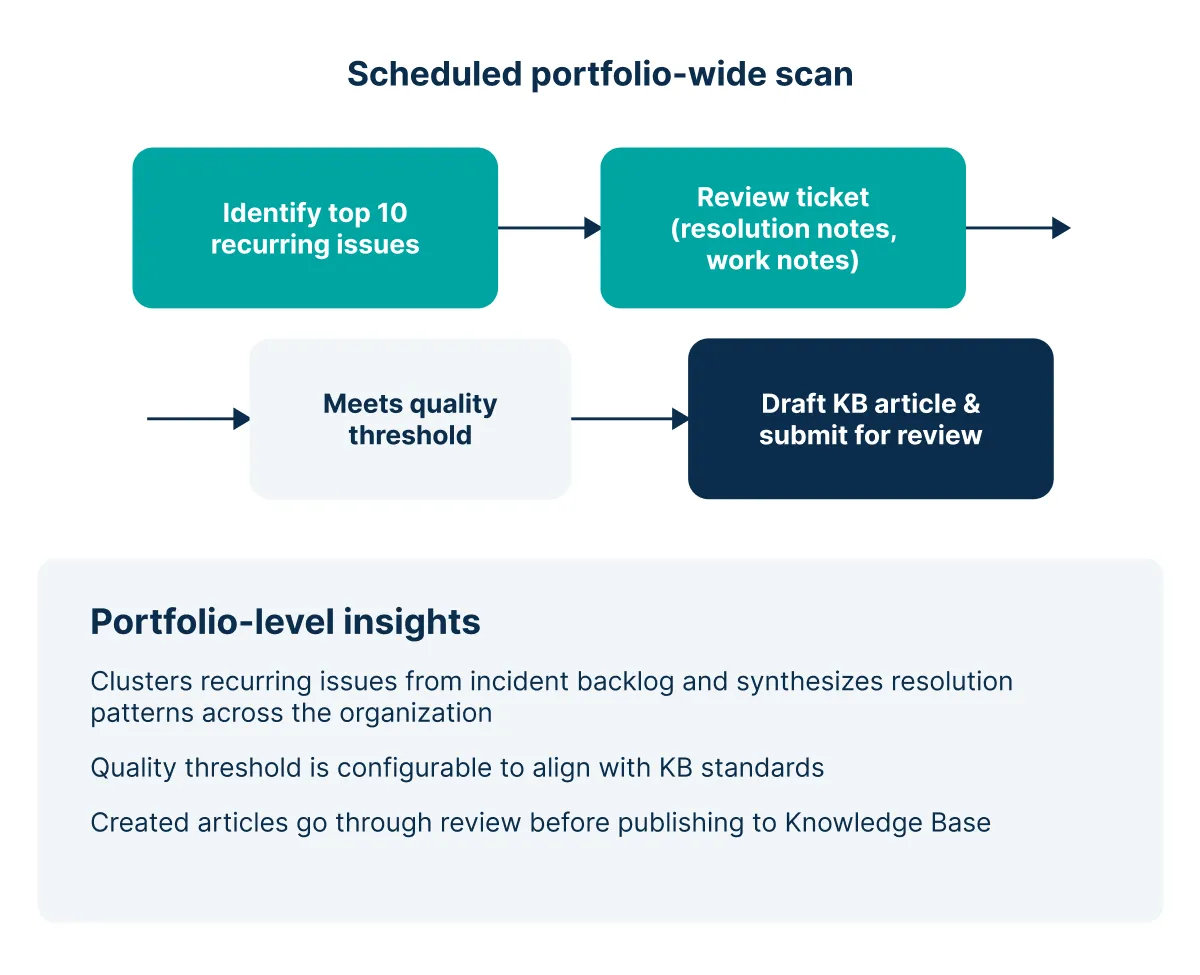
The fourth agent runs on a schedule and operates at the portfolio level rather than the individual incident level.
The Knowledge Agent identifies the top ten recurring issues across the incident backlog and reviews the resolution notes, work notes, and supporting details from those tickets. If a cluster of incidents has enough high-quality information - measured against a configurable threshold - the agent drafts a Knowledge Base article and submits it for review.
The Results
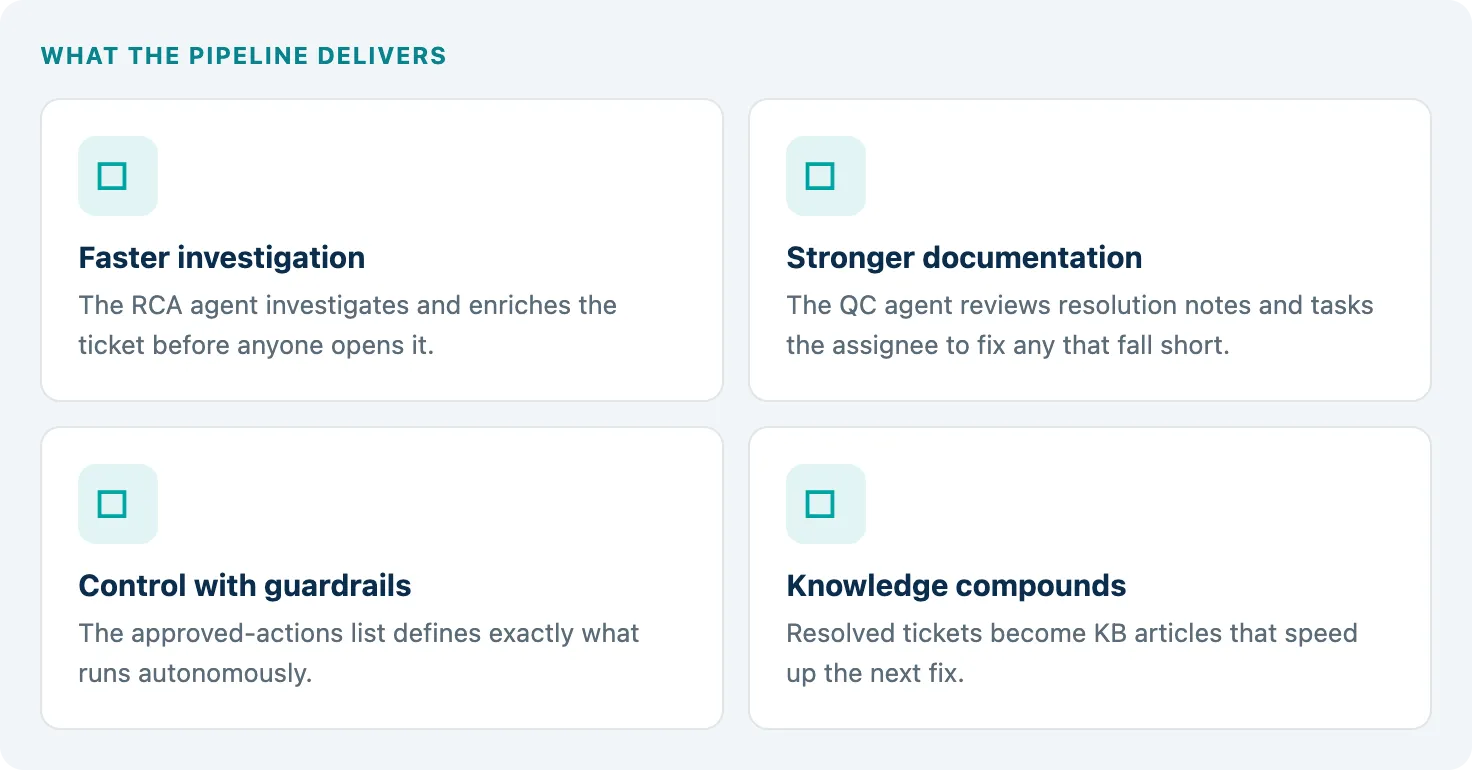
Investigation time drops dramatically. Engineers no longer spend their first twenty minutes on every batch job incident logging into external systems, hunting for output, and decoding it manually. That work happens automatically before anyone reads the ticket.
Resolution quality becomes consistent. The QC loop ensures that the documentation standard the team aspires to is the one they actually hit - not occasionally, but every time.
Automation operates within guardrails. By defining the approved action list, the customer retains full control over what the system can do autonomously while still capturing efficiency gains in the resolutions that matter most.
The Knowledge Base gets smarter over time. The curation agent ensures that what the team learns from incidents doesn't just sit in closed tickets - it feeds back into the systems that help future agents and future engineers resolve issues faster.
Building Smarter Operations with RapDev
This engagement is a good example of what Now Assist makes possible when it's implemented thoughtfully. If your team is dealing with high-volume, low-signal incidents, or if you're sitting on months of closed tickets that aren't generating any lasting value, we'd love to talk about what a pipeline like this could look like for your environment.
Ready to streamline your operations with AI and ServiceNow? RapDev can help! Get in touch.



.png)