

Where AI Adds Value
Modern DevOps teams aren't short on data; they're short on clarity. As environments grow, so do dashboards, alerts, and troubleshooting complexity. AI helps teams cut through the noise by surfacing the insights that matter most.
Faster Setup
Getting started with observability no longer has to begin with a blank slate. AI can analyze your environment, recognize technologies like Kubernetes, AWS, databases, and containers, then recommend agent configurations, integrations, dashboards, monitors, and tagging strategies. Instead of spending days configuring tools, teams can start with an intelligent baseline and customize from there.
Smarter Alerting
Static thresholds don't account for how applications behave in the real world. AI learns what "normal" looks like and detects anomalies based on actual usage patterns, not arbitrary CPU or memory limits. With capabilities like Datadog Watchdog, teams receive fewer false positives and more meaningful alerts, helping reduce alert fatigue.
Better Dashboards
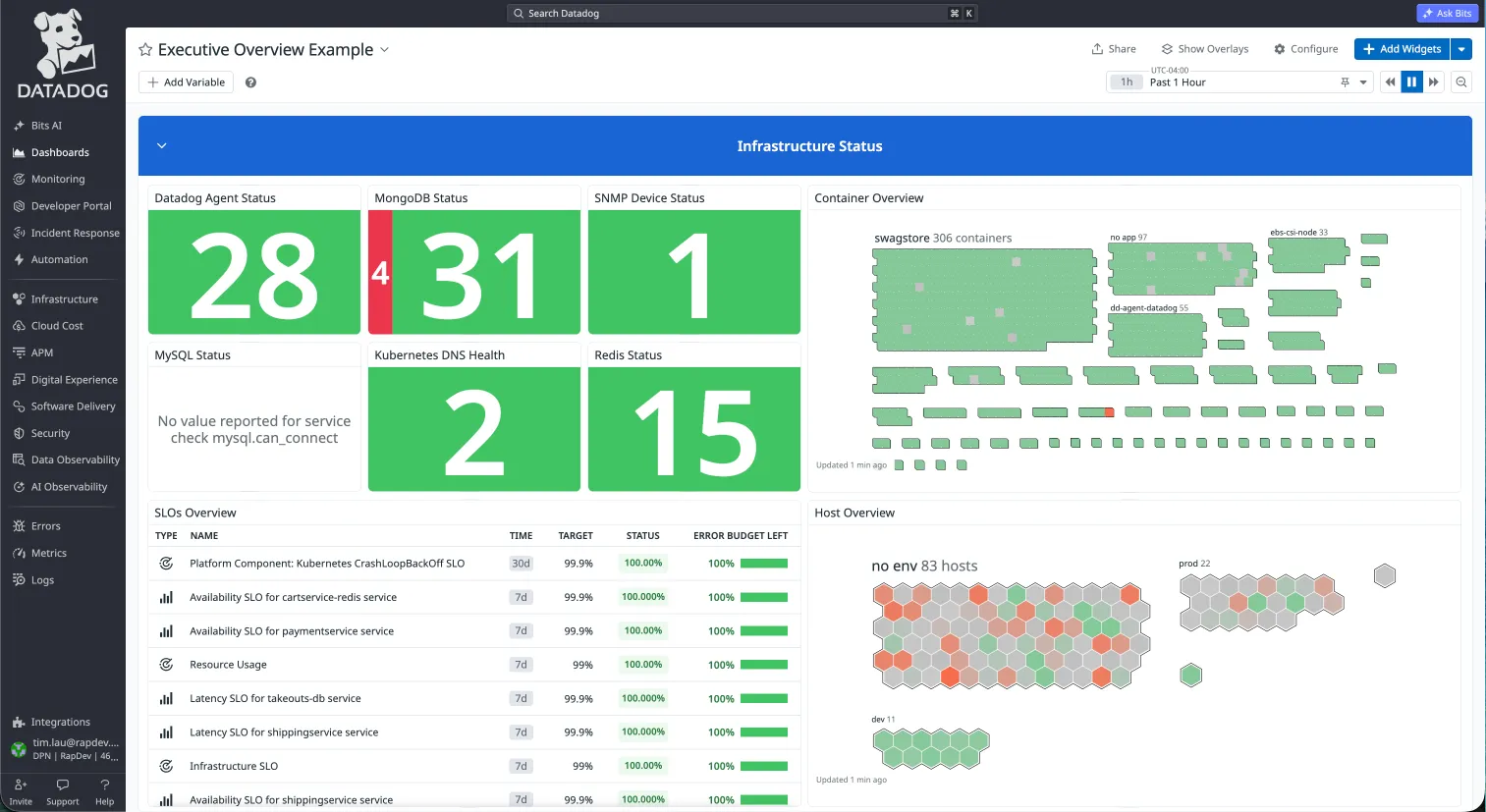
Building dashboards can be time-consuming, especially in complex environments. AI analyzes service dependencies, existing telemetry, and usage patterns to recommend dashboards and visualizations that highlight the metrics most important to your teams. Engineers spend less time building dashboards and more time using them.
Faster Root Cause Analysis
During an incident, AI correlates logs, metrics, traces, deployments, and infrastructure changes to identify likely root causes. Instead of manually jumping between multiple tools, engineers get a prioritized view of what changed and what is most likely contributing to the issue, dramatically reducing time to resolution.
Automated Incident Response
AI also helps streamline incident management by automatically summarizing outages, identifying impacted services, highlighting recent changes, and recommending next steps. Integrated with platforms like Slack, Jira, ServiceNow, or PagerDuty, it can trigger workflows, notify the right teams, and even draft postmortems, allowing responders to focus on solving the problem instead of gathering information.
Don't Skip the Basics
AI amplifies your observability, but it doesn't replace good engineering practices. Success still depends on a solid foundation, including consistent tagging, clear architecture, and well-defined SLIs and SLOs. The better your telemetry, the smarter AI becomes.

The Bottom Line
AI isn't replacing observability engineers; it's augmenting them. By automating repetitive analysis and surfacing meaningful insights, AI reduces cognitive load, accelerates troubleshooting, and helps teams focus on building reliable systems instead of constantly reacting to incidents.
Combined with a platform like Datadog, AI transforms observability from reactive monitoring into proactive system intelligence, helping teams understand not just when something breaks, but why, and increasingly, before it does.
Want to see more AI in Datadog? Check out our AI Essentials video playlist.
.svg)


.svg)